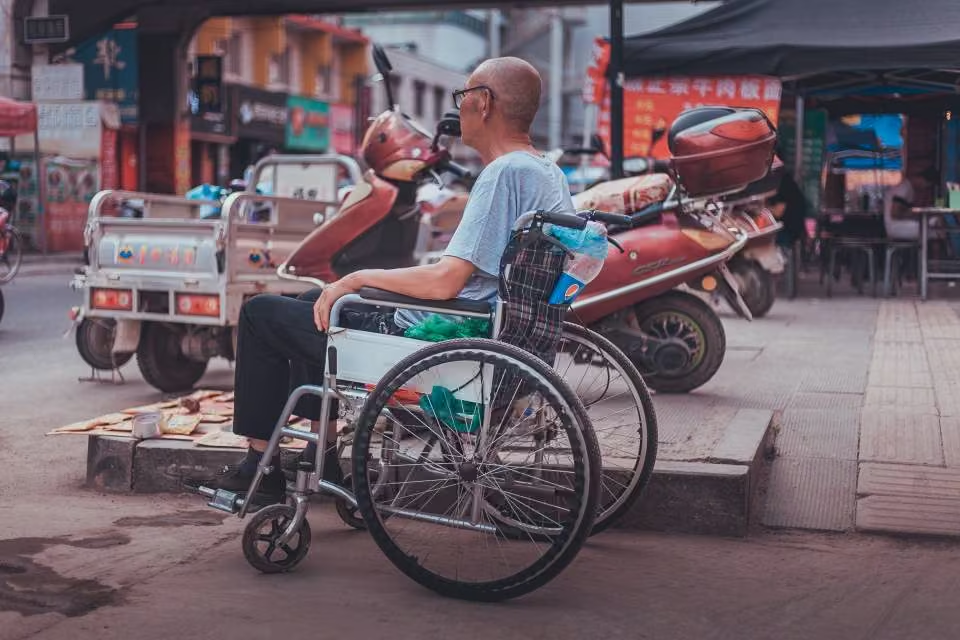
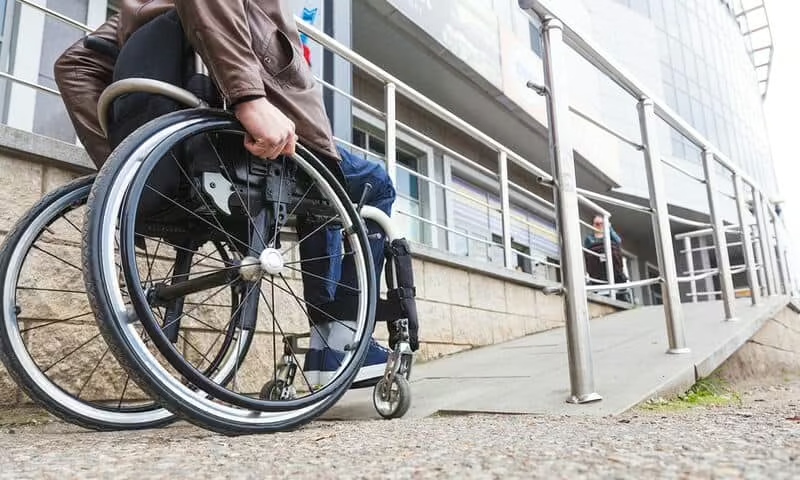
People with mobility challenges seek cities that are truly accessible and welcoming to everyone, offering an environment that allows them to move freely and participate actively in daily life without restrictions.
For many, accessibility is not just a matter of convenience, but a fundamental right directly linked to quality of life, autonomy, and social inclusion.
Infrastructure and Spaces
The first and foremost demand is the improvement of the city’s physical infrastructure. This includes constructing obstacle-free sidewalks with sufficient width for wheelchair passage, and ramps that are properly placed and built according to standards. Sidewalks must be well-maintained, free of potholes and uneven surfaces that could hinder movement for people with mobility difficulties or pose a safety risk.
Additionally, the presence of elevators in public spaces is important, with stops on each floor, and properly installed handrails on stairs. Especially in central city areas, elevators must operate reliably and be accessible to everyone, without delays or usage restrictions.
Public transportation plays a critical role in the daily lives of people with mobility difficulties. Buses, trains, and trams must have low-floor entrances, ramps, and designated spaces for wheelchairs, facilitating the boarding and alighting of passengers. Drivers and staff should be trained in assisting people with disabilities, demonstrating respect and willingness to provide help.
Information and Digital Accessibility
Accessibility is not limited to physical infrastructure but also concerns information. People with mobility challenges need clear, accurate, and timely information about which public services, stores, and dining venues are accessible. This can be achieved through digital apps, online maps, and website information that provide detailed instructions on reaching a destination without difficulty.
Moreover, public services should offer options for remote assistance, such as online application submission or telephone support, to reduce the need for physical presence. This way, people with mobility challenges can avoid unnecessary travel and inconvenience, saving time and ensuring more comfortable access to the services they need.